02Arcade History
Japanese Arcades: Medal Games, Crane Cabinets and Rhythm Floors
Japan never let the arcade fade. Its game centres still fill whole buildings, and each floor has its own sound, crowd and set of rules.
- Acc. no.
- TT.2026.15
- Hall
- 02Arcade History
- Catalogued
- Time to read
- 4 min
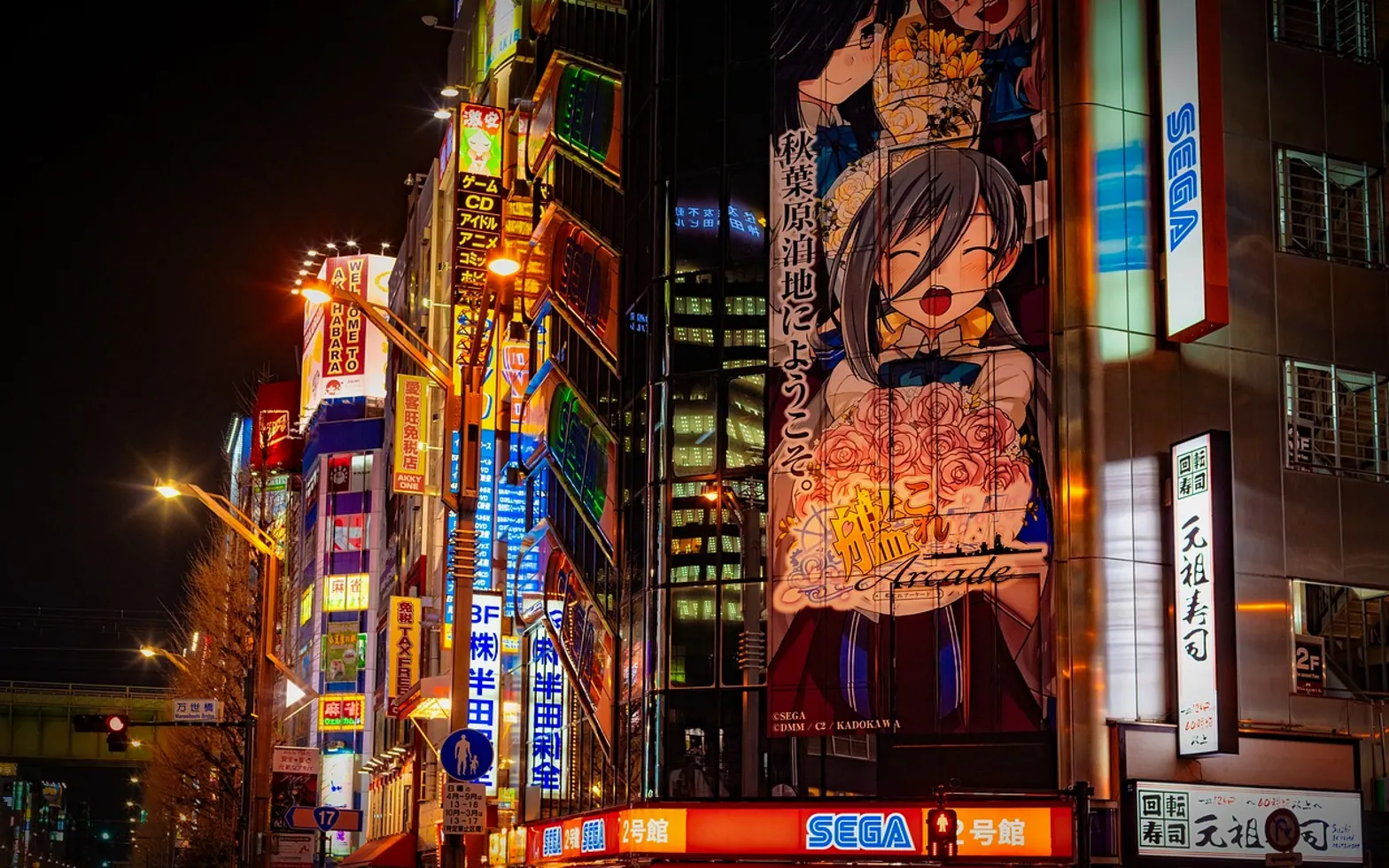
A Japanese arcade, usually called a game centre or gēsen, is a multi-storey amusement hall filled with crane games, medal games, rhythm cabinets, video games and photo-sticker booths. Unlike pachinko parlours, game centres are amusement venues: you can win prizes from crane machines, but tokens and scores can never be turned into cash. They remain busy in city centres and near train stations, long after arcades in many other countries shrank or closed.
A floor-by-floor tour
Layouts differ, but many large game centres follow a similar pattern:
| Floor | What you usually find |
|---|---|
| Ground floor | Rows of crane and prize games, bright and loud to draw people in from the street |
| Next floor | Photo-sticker booths, often with rules about who may enter the area |
| Middle floors | Medal games: token pushers, horse-racing tables, bingo-style and slot-style machines |
| Upper floors | Rhythm games, fighting games, card-based games and other video cabinets |
Crane games and prizes
Crane cabinets in Japan are often known as UFO catchers after a popular early model. Prizes range from plush toys to figures and snacks, and many are made only for arcades. Staff will sometimes reposition a prize to give a player a fairer chance, and some games are designed to be won by nudging a box gradually rather than by grabbing it. The same questions about grip and settings apply as anywhere else; our guide to how claw machines decide a grip explains them.
Medal games: gambling-style, but not gambling
Medal corners look the most like a casino. Players buy tokens called medals and feed them into pushers, horse-racing simulations, roulette-style tables and slot-like machines. Winning returns more medals. The key difference is that medals have no cash value and cannot leave the building. Regular players can often store them in a medal bank tied to a membership card, which lets them continue another day. These pushers are close cousins of the coin pushers and penny falls of British seaside piers.
That separation is deliberate. Japanese amusement law keeps game centres and gambling apart, limits the value of prizes and forbids exchanging winnings for money. Pachinko and pachislot halls run on a different footing; see how pachinko works and our explainer on pachislot machines.
Photo-sticker booths
Photo-sticker booths, known as purikura, are a fixture of most large game centres. Friends crowd into a booth, pose for a short series of shots, then decorate the results on a touchscreen with frames, stamps and handwriting before the machine prints a sheet of stickers. The booths are especially popular with students and couples, and some areas are set aside for groups that include women, a rule meant to keep the space comfortable. It is the one floor where the prize is guaranteed every time.
Rhythm games and the upper floors
Rhythm cabinets, with drums, dance pads, buttons or touch panels, attract skilled regulars who play to an audience. Fighting games and card-based games, which dispense collectible cards with each play, also keep loyal followings. Many cabinets let players save progress on an IC card, so a game can be continued across visits.
Why arcades survived in Japan
Several things kept the game centre alive. Cities are dense and built around train stations, so a busy arcade always has passing trade. Many homes are small, which makes going out to play more appealing. Manufacturers kept producing arcade-only experiences, from large cabinets to card-linked games, that a home console cannot easily copy. And prize games give even casual visitors something to take home.
House rules and etiquette
- Most machines take 100-yen coins; change machines sit on every floor, and some cabinets accept IC cards.
- Smoking is limited to designated areas, if allowed at all.
- Do not leave belongings on a machine to reserve it for long; queue politely for popular cabinets.
- Photography rules vary, especially near photo booths, so look for signs.
- Younger teenagers face evening curfews, and staff may ask their age late at night.
Tips for first-time visitors
- Start on the ground floor to get a feel for crane games, but set a limit before the first coin.
- Try a medal game for the atmosphere; a small cup of medals can last a long time on a pusher.
- Watch a rhythm game before playing; the regulars are often worth the stop alone.
- Ask staff for help with a stuck prize. It is normal and they are usually happy to assist.
Game centres welcome all ages during the day, but this magazine writes for adults and its interest is in where play meets prizes. Pick a spending limit in yen before you go upstairs, and stop when the coins in your pocket are gone.
Constants of the cabinet
Fixed points behind every game
Whatever the theme, the lights or the feature list, these stay the same.
Results come from a random number generator and each spin stands alone.
The operator keeps a share of stakes over time; that is how the games are funded.
No feature, time of day or betting pattern turns play into income.
The info screen of the version you see is the only reliable source for its settings.
Every gambling game on these pages is for adults aged 18 and over.
Turbo and autoplay change how fast a budget is used, never the odds behind each spin.
Something to add?
Corrections are always welcome.