01Arcade History
Skee-Ball: How to Play, How It Scores and Where the Lanes Came From
A wooden ball, a short ramp and a set of rings that get smaller as the numbers climb. Skee-ball looks simple, and in a way it is, but the lane has more history and more technique than most players notice.
- Acc. no.
- TT.2026.25
- Hall
- 01Arcade History
- Catalogued
- Time to read
- 5 min
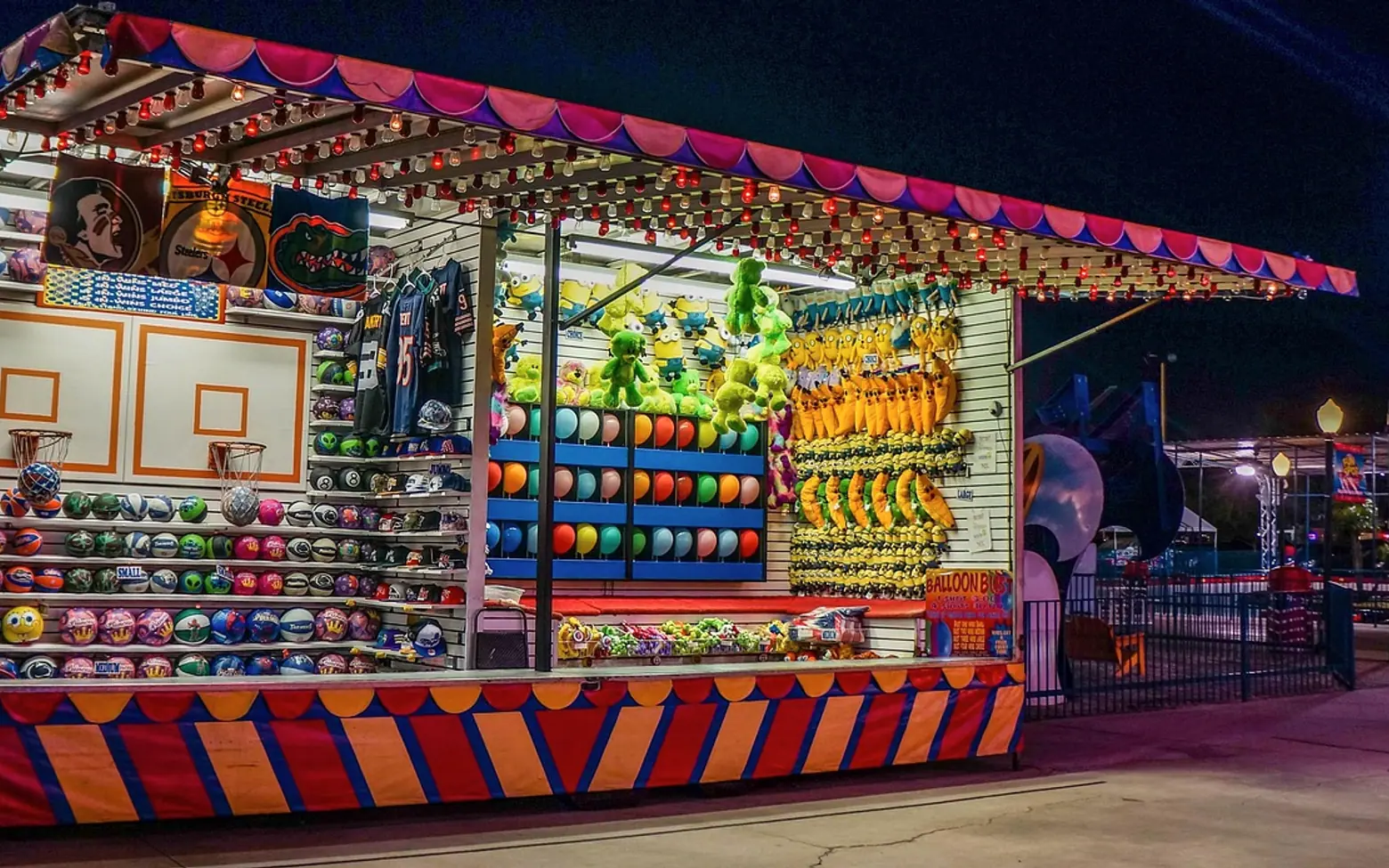
The sound gives it away before you see it: a hollow rumble as a wooden or composite ball runs up an inclined lane, a soft knock as it leaves the hump, then the clack of it dropping into a ring. Somewhere behind it a strip of paper tickets starts feeding out of the cabinet. Skee-ball has been part of that soundtrack in amusement halls for more than a century, and it remains one of the few arcade games where the player's own hand decides most of the result.
How to play skee-ball
A game starts when you pay for a credit and the machine releases a set of balls into the trough at your end of the lane, often nine of them. You roll each ball up the alley, underhand, as you would in bowling. Near the far end the lane rises into a small ramp, or hump, that lifts the ball into the air. It lands in the target area, a sloped board of concentric rings, and falls through whichever ring it settles in. The score for that ring is added to your total, and when the last ball has gone the game ends.
A few points about the basics that newcomers often miss:
- Roll, do not throw. Lobbing the ball over the hump is against the spirit of the game and against the rules of most venues; it can also damage the target board.
- Stay behind the line. Leaning far over the lane is usually not allowed in league play and is frowned on in arcades.
- Use the rails. The side rails are part of the lane, and many steady players bank the ball off one of them on purpose.
How skee-ball scores
The target is laid out like a bullseye tilted towards the player. The lowest-scoring ring is the large one at the bottom, and the values climb as the rings get smaller and higher up the board. Most modern lanes also have two small pockets in the top corners worth the most of all.
| Target | Points on a typical lane | How hard it is to hit |
|---|---|---|
| Outer ring (bottom) | 10 | Hard to miss; a weak roll ends here |
| Second ring | 20 | Easy with moderate speed |
| Third ring | 30 | Needs a fairly straight line |
| Fourth ring | 40 | Needs a straight line and the right pace |
| Centre cup (top) | 50 | Small opening, a consistent roll required |
| Corner pockets | 100 | Tiny targets at the edges; easy to miss into the 10 |
Exact layouts vary between manufacturers and older machines, and some lanes have no corner pockets at all. On a ticket-paying arcade lane, the number of tickets depends on the final score and on how the operator has set the machine, which is why the same score can earn a different handful of tickets in two venues.
A few habits for steadier rolls
Skee-ball rewards repetition more than power. Players who score well tend to do the same few things every time:
- Pick one release point. Stand in the same spot and let the ball go from the same height, so the only thing you adjust is the line.
- Find a pace that reaches the 40 or 50. Too fast and the ball bounces off the back of the board; too slow and it drops into the outer rings.
- Try the bank shot. Rolling the ball at an angle so it touches a side rail before the hump often sends it up the middle more reliably than a straight roll.
- Weigh the corner pockets. The 100 pockets look tempting, but a near miss usually falls into the 10. A string of 40s can beat a game spent chasing corners.
Where the lanes came from
Skee-ball is usually traced to Philadelphia, where Joseph Fourestier Simpson patented the game in 1908 and the first lanes were built soon after. The early alleys were much longer than the cabinets in arcades today, closer in feel to a small bowling lane, which made them better suited to dedicated halls and boardwalk amusement buildings than to a corner of a games room. Over the following decades manufacturers shortened the lanes, which let operators fit rows of them side by side.
That move from long alleys to compact lanes is what turned skee-ball into a seaside and amusement-park staple. It sat comfortably beside other coin games of the boardwalk, from the seaside penny falls to the shooting galleries, and it suited the family crowds those places wanted. Later came electronic scoring, lights and sound effects, and the ticket dispenser that tied each game to a prize counter. Arcades that sold brass arcade tokens often kept a bank of skee-ball lanes near the redemption desk, since the game drew players back for one more round.
In recent years the game has also found an adult audience. Bars in some cities run skee-ball leagues with teams, standings and season finals, using lanes set up for scoring rather than tickets. The name itself is a trademark, so you will also see similar machines sold under generic names such as alley rollers.
Skill, chance and the prize counter
Skee-ball is generally treated as a game of skill: the score follows from how well the ball is rolled, and practice makes a visible difference. That set it apart from some of its neighbours on the arcade floor. Flipper games spent years under suspicion as gambling devices, a story told in our history of pinball's banned years, and prize cabinets raise their own questions, covered in the piece on how crane games set their grip.
The ticket counter is the part to keep an eye on. Tickets are a way of turning skill into small prizes, but the exchange rate is set by the venue, and the plush toys on the top shelf usually take many games to reach. Treat the credits as the cost of the fun and the prizes as a souvenir. The same applies wherever lanes sit among prize games, whether on an American boardwalk or on Seoul's arcade floors, where ball-rolling games share space with rhythm cabinets and claw machines.
Anything that involves wagering money for a chance at a cash return is a different matter: it is for adults only, and it is worth checking what local law allows before playing. A skee-ball lane asks for something simpler, which may be why it has lasted so long: a steady hand, a good line and nine more balls whenever you want them.
Constants of the cabinet
Fixed points behind every game
Whatever the theme, the lights or the feature list, these stay the same.
Results come from a random number generator and each spin stands alone.
The operator keeps a share of stakes over time; that is how the games are funded.
No feature, time of day or betting pattern turns play into income.
The info screen of the version you see is the only reliable source for its settings.
Every gambling game on these pages is for adults aged 18 and over.
Turbo and autoplay change how fast a budget is used, never the odds behind each spin.
Something to add?
Corrections are always welcome.